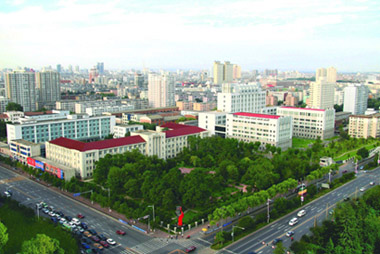
The Institute of Metal Research (IMR), Chinese Academy of Sciences (CAS) was founded in 1953 as one of the first research institutes established by CAS after the founding of the People's Republic of China. Since then, IMR has firmly established itself as an indispensable base for the research and development of materials science and engineering in China.
IMR has conducted comprehensive research covering advanced structural materials—such as superalloys, titanium alloys, special alloys, high performance steels, aluminum alloys, magnesium alloys, metal matrix composites, and ceramics—as well as novel functional materials including nanomaterials, carbon materials, magnetic materials, biomaterials, and energy materials. Its research encompasses material composition design, structural characterization, processing and fabrication, performance testing, and service behavior studies.
IMR is home to the Shenyang National Laboratory for Materials Science, Shi Changxu Innovation Center for Advanced Materials, Materials Corrosion and Protection Center, the National Engineering Research Center of High Performance Homogenized Alloys, the National Engineering Research Center of Corrosion Control of Metals and Liaoning Shenyang National Field Observation and Research Station for Material Corrosion in Soil and Atmospheric Environments. Together, these platforms form an open, integrated, and collaborative innovation system that covers the entire chain and all key elements of materials science and engineering, fostering a cohesive and comprehensive approach to scientific and technological advancement.
IMR has gathered together outstanding scientists and technical experts in the field of materials research. IMR has more than 1900 staff, including 7 members of Chinese Academy of Sciences and the Chinese Academy of Engineering. IMR scientists are actively involved in widely international academic affairs. Among them, 11 scientists serve in 15 international academic organizations and 65 scientists serve academic positions in 58 international journals.
IMR is one of the first organizations authorized to confer doctoral degrees in materials science and engineering in China. In 2015, IMR collaborated with the University of Science and Technology of China to establish the School of Materials Science and Engineering, dedicated to cultivating future leaders in the field of materials. Currently, IMR has an enrollment of more than 1400 graduate students who have the opportunity to to engage with cutting-edge developments in materials science, participate in major research projects, and hone their research skills and innovative capabilities through hands-on scientific practice.
IMR emphasizes fostering cooperative relationships with scientific research institutes and organizations in materials science and engineering both at home and abroad. In addition, IMR frequently organizes international academic conferences and bilateral seminars. For example, IMR has established the “Lee Hsun Lecture Series” awards to honor scientists who have made important contributions to materials science. Theses awards are now world-known in the field of materials science.
IMR also publishes 6 academic journals in cooperation with various academic societies. Among these, Acta Metallurgica Sinica and the Journal of Materials Science & Technology have become influential academic publications in China's materials research community.
During the past over 70 years, IMR has made strategic contributions to China’s economic growth and has achieved many landmark technological breakthroughs. IMR has received more than 400 awards, including more than 100 national awards. Many of its important research results have been published in top scientific journals in the field of materials science and engineering.