Researchers from the Institute of Metal Research, Chinese Academy of Sciences (IMR, CAS) have developed an innovative flexible sensor capable of simultaneously detecting strain, strain rate, and temperature through a single active material layer, representing a significant advance in multimodal sensing technology.
The study, published in Nature Communications, addresses longstanding challenges in conventional sensors that typically require complex multilayer designs integrating different materials for distinct sensing functions. These traditional approaches often involve complicated signal acquisition and external power supplies, limiting their reliability in continuous monitoring applications.
Led by Prof. TAI Kaiping, the team created a flexible sensor based on a specially designed network of tilted tellurium nanowires (Te-NWs). Through material and structural engineering, they overcame a fundamental limitation where thermoelectric and piezoelectric signals could not be collected in the same direction within conventional materials. In this unique architecture, both signals are simultaneously detected and output in the out-of-plane direction.
The sensor demonstrates exceptional performance with strain sensitivity of 0.454 V, strain rate sensitivity of 0.0154 V·s, and temperature sensitivity of 225.1 μV·K⁻¹, surpassing previously reported multimodal sensors.
"This work provides new insights for developing flexible, single-channel multimodal sensors based on multi-physics coupling effects," explained the research team. "The strain rate sensing capability is particularly important for dynamic scenarios where the rate of deformation significantly influences material response."
Combined with first-principles calculations, the study reveals how charge redistribution in Te atoms generates piezoelectric effects and how external fields like thermoelectric potentials modulate these signals. The research opens new application directions for coupled "nanogenerator" systems in fields including artificial intelligence, biomedical monitoring, and flexible electronics.
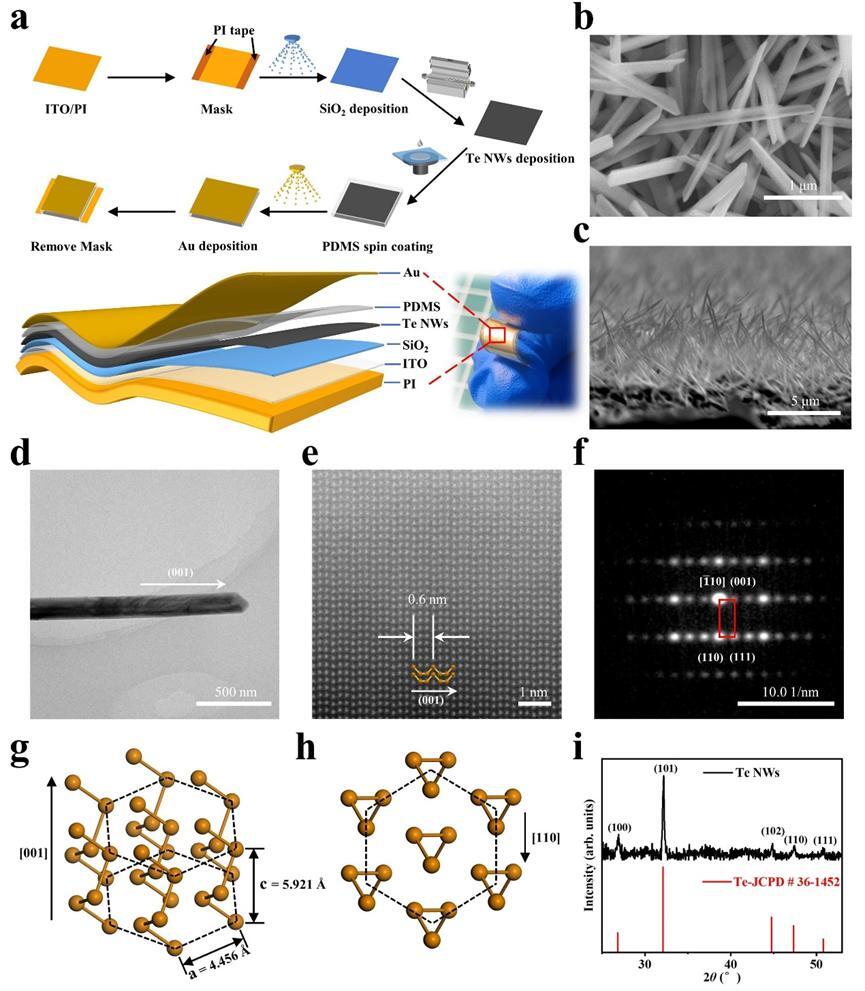
Design and microstructural characteristics of the flexible single-channel strain/strain rate-temperature multimodal sensor (Image by IMR)
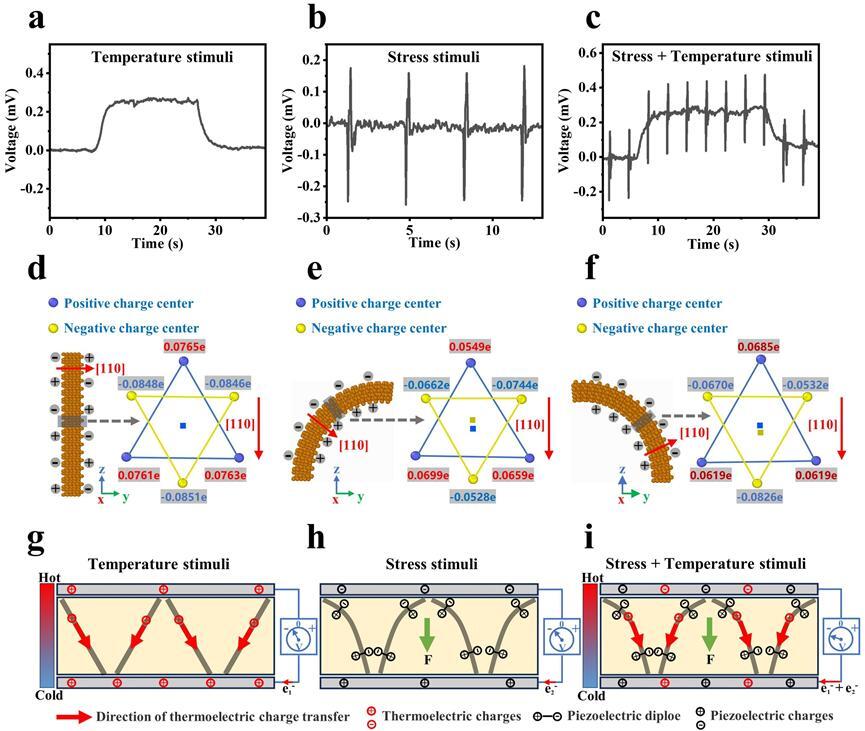
Sensing mechanism of the flexible single-channel strain/strain rate-temperature multimodal sensor (Image by IMR)
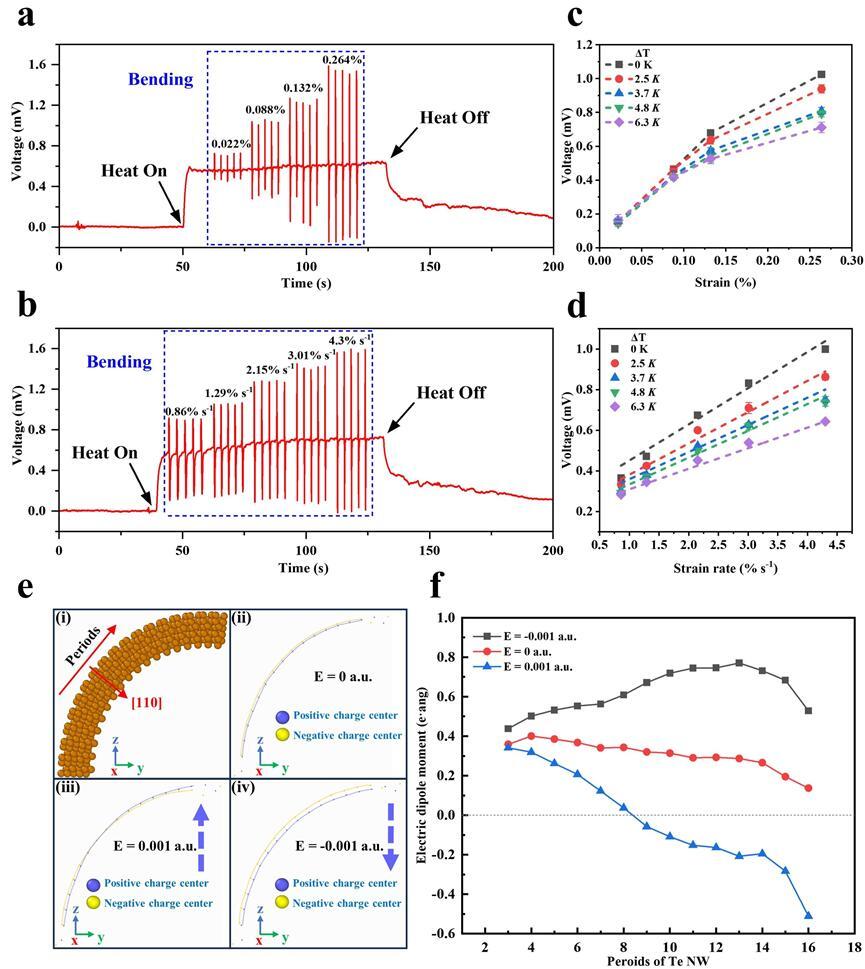
Performance test curves of the strain/strain rate-temperature multimodal sensor (Image by IMR)
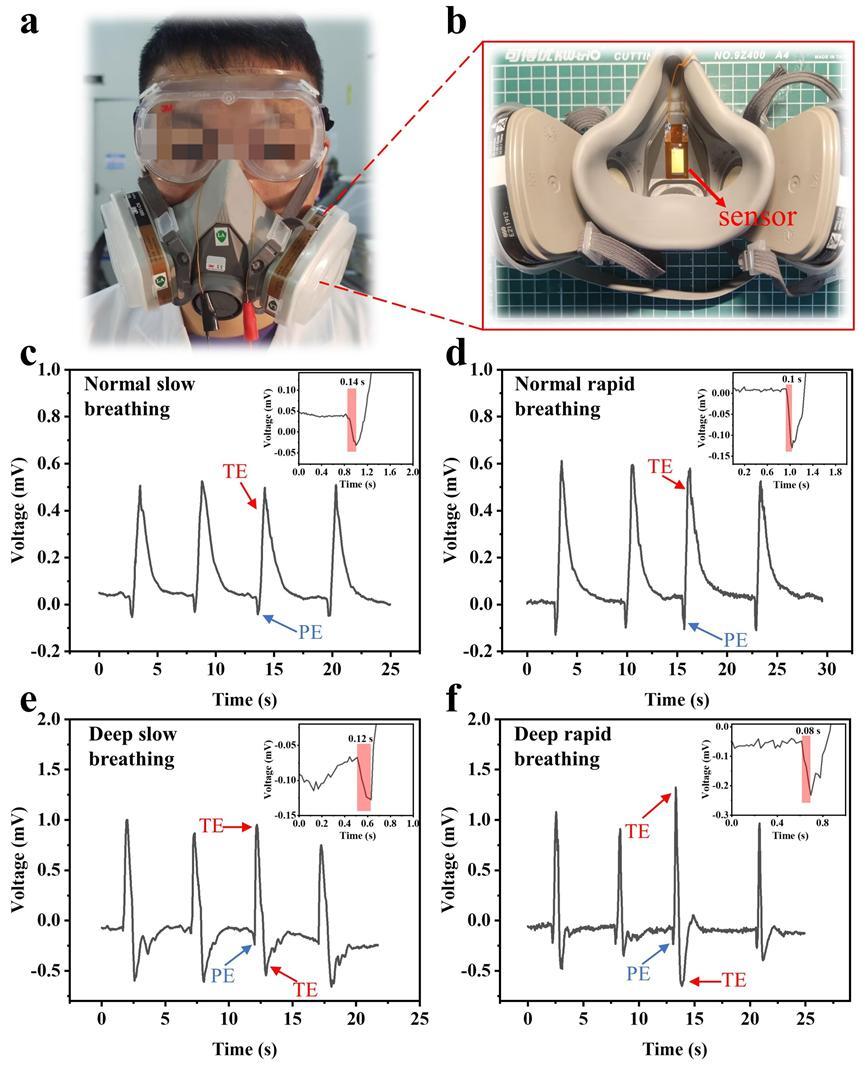
Application demonstration and verification of the flexible single-channel strain/strain rate-temperature multimodal sensor (Image by IMR)