A research team from the Institute of Metal Research, Chinese Academy of Sciences (IMR, CAS), has proposed and constructed a novel ferroelectric valve, a multilayer device that enables non-volatile, multi-state modulation of electrical resistance by switching the polarization orientation of adjacent ferroelectric layers. This innovation opens a new path for multifunctional, low-power information devices in the post-Moore era.
Spin valves, which modulate resistance by controlling spin orientations in ferromagnetic layers, have been instrumental in advancing spintronic technologies such as magnetic memory and sensors. Inspired by the conceptual analogy between ferroelectricity and ferromagnetism, a research team led by Prof. CHEN Chunlin from the Shenyang National Laboratory for Materials Science of IMR has now proposed and constructed a structurally analogous device—a “ferroelectric valve”—where resistance is tuned by switching the polarization direction in neighboring ferroelectric layers.
Using pulsed laser deposition, Chen group fabricated a sandwich-structured ferroelectric valve consisting of two ferroelectric LaTiO₃.₅ layers separated by an ultrathin conductive m-LaTiO₃ layer, with the middle layer precisely controlled to a thickness of just 3 to 6 atomic layers.
Combining aberration-corrected scanning transmission electron microscopy with first-principles calculations, the researchers revealed that when the polarizations of the two ferroelectric layers are antiparallel, the bandgap of the conductive layer significantly narrows and carrier concentration increases, leading to markedly higher conductivity compared to the parallel configuration. Moreover, the antiparallel polarization configuration induces charge redistribution and orbital hybridization that lift the degeneracy of Ti 3d t₂g orbitals, resulting in pronounced in-plane electrical anisotropy.
By tuning the polarization orientation of the ferroelectric layers via external fields, the resistance state and the easy conduction axis of the central LaTiO₃ layer can be flexibly switched, to achieve non-volatile multi-state resistance modulation.
Notably, LaTiO₃.₅ features a Curie temperature exceeding 1500 K and excellent lattice matching with LaTiO₃, ensuring high structural integrity, atomically flat interfaces, and outstanding thermal stability. This makes the ferroelectric valve promising for high-temperature electronics and other demanding applications.
The research, published in Advanced Materials, introduces a new device paradigm that extends the functional potential of ferroelectrics in next-generation information technology.
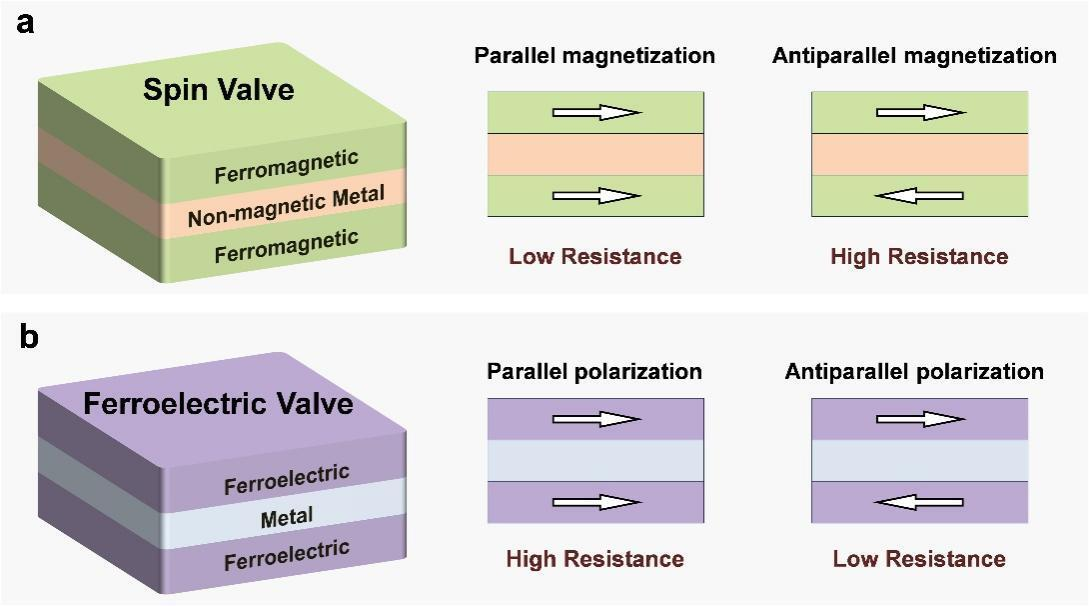
Design concept of the ferroelectric valve. (Image by IMR)
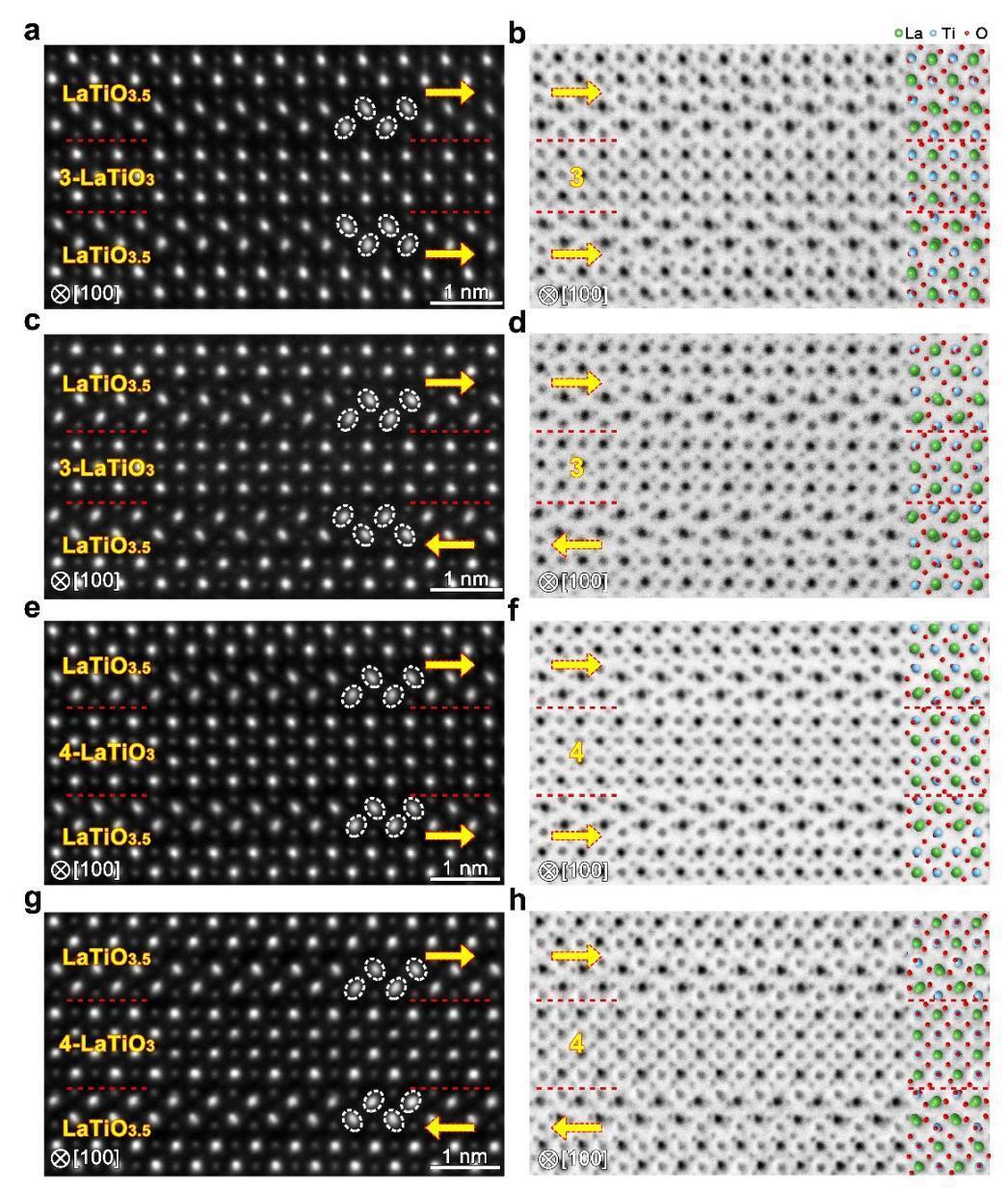
Atomic structures of the LaTiO3.5/m-LaTiO₃/LaTiO3.5 multilayer heterostructure under different polarization configurations. (Image by IMR)
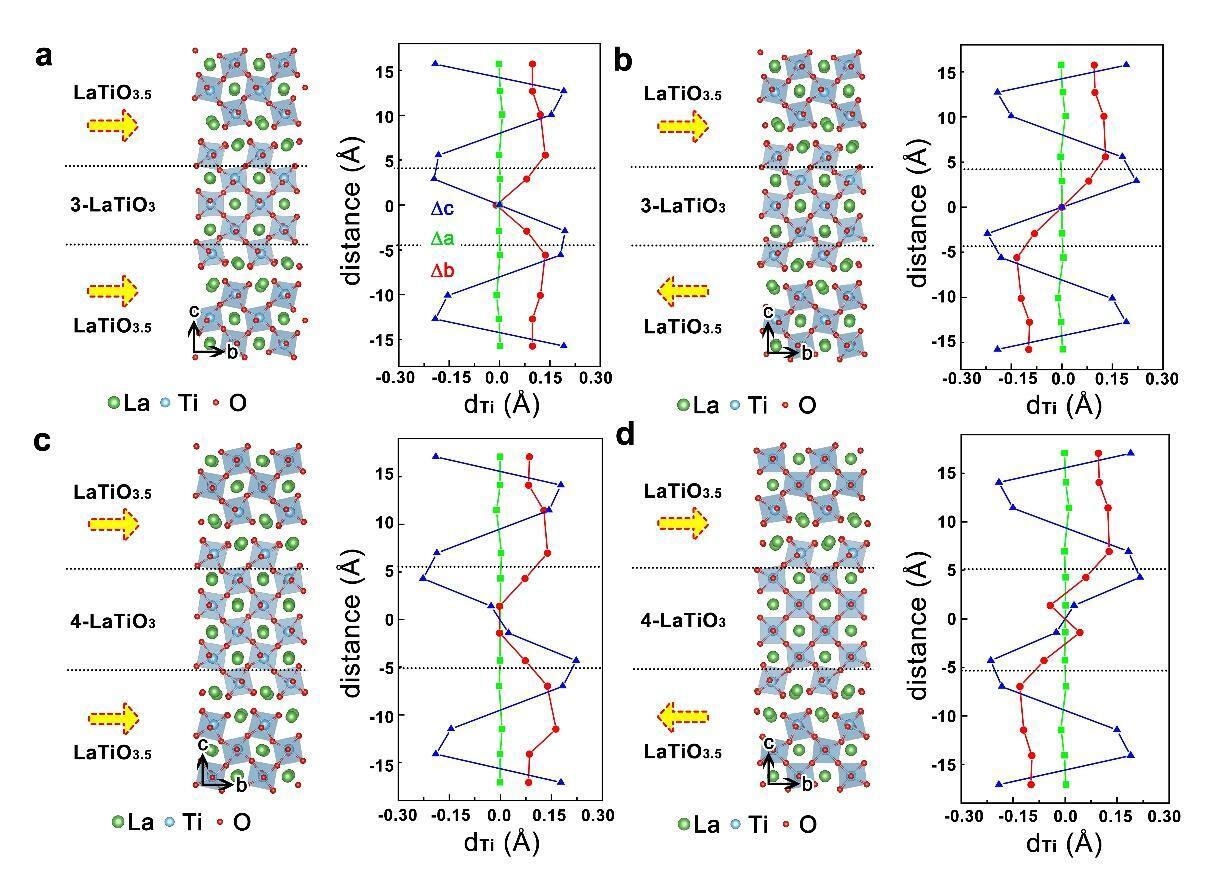
Atomic structure models and polarization. (Image by IMR)
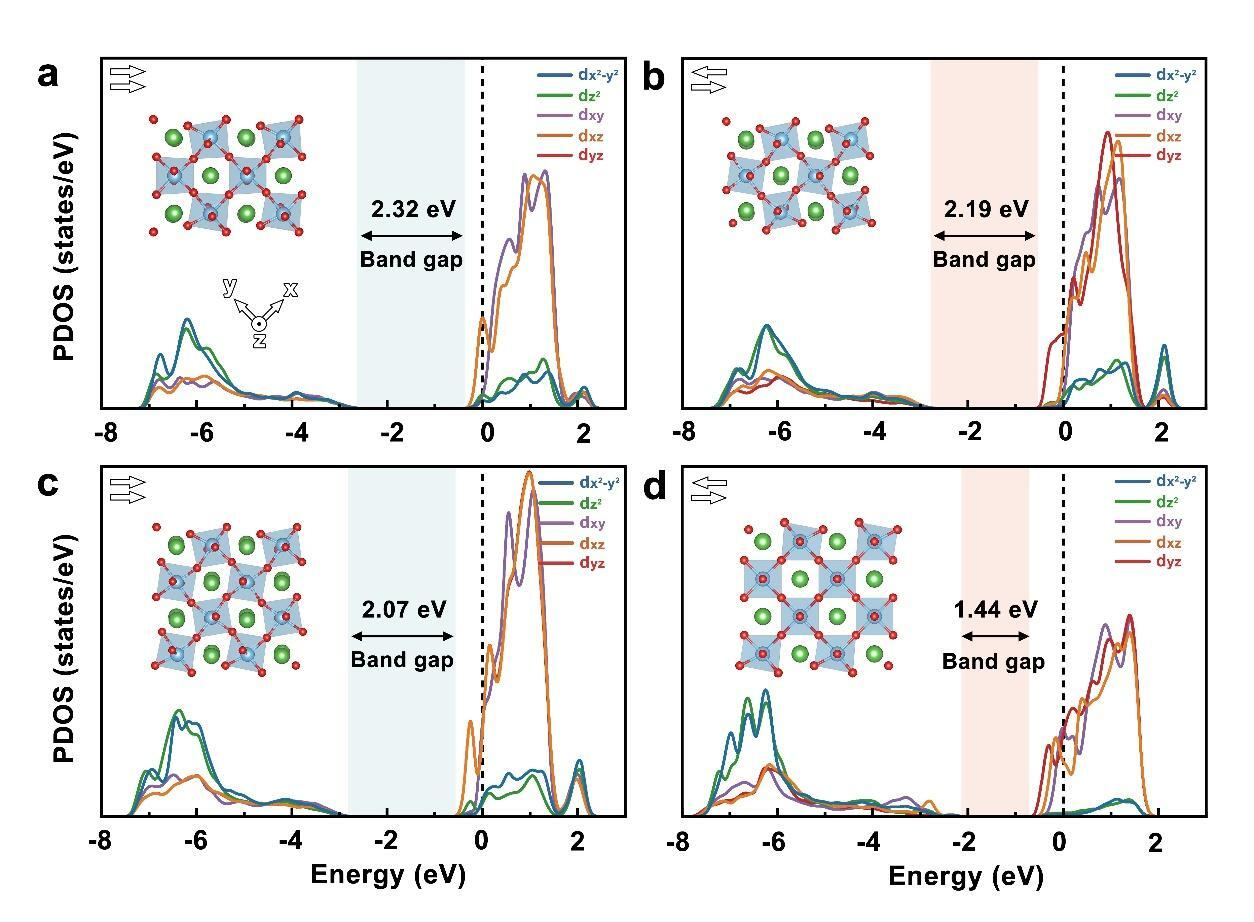
Bandgaps under different numbers of conductive layers and polarization configurations. (Image by IMR)
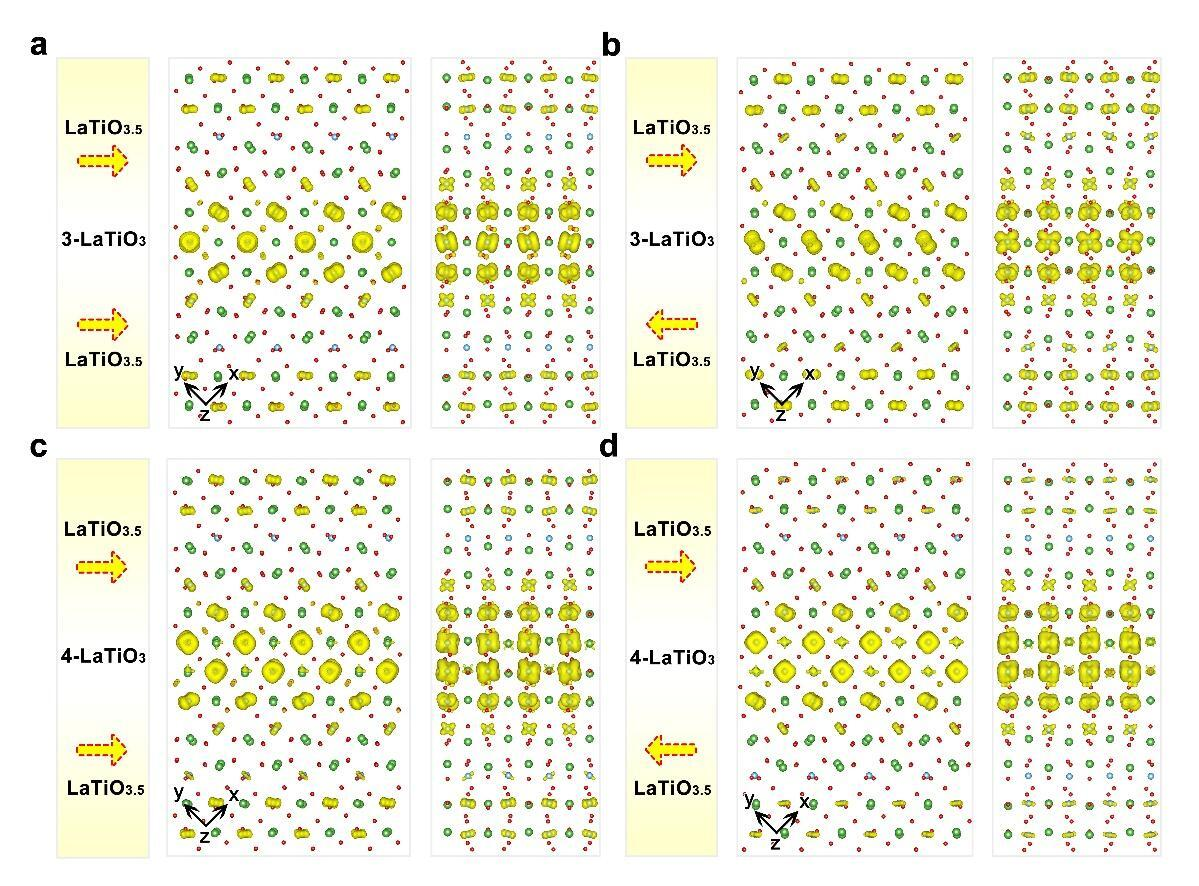
Charge densities under different numbers of conductive layers and polarization configurations. (Image by IMR)