Scientists from the Institute of Metal Research, Chinese Academy of Sciences (IMR, CAS), have developed a self-compensated flexible dual-function sensor that can simultaneously recognize gestures and perceive temperature, offering a simplified solution for multifunctional sensing in wearable electronics, intelligent robotics and electronic skin. The research was recently published in Advanced Functional Materials.
Multifunctional flexible sensors capable of detecting multiple physical parameters such as temperature and strain play a critical role in the emerging era of smart systems. However, conventional approaches typically rely on integrating multiple sensing units or different functional materials, increasing device complexity, thickness, and packaging difficulty. More fundamentally, within a single sensing unit, different physical signals—such as strain-induced resistance changes and temperature-induced resistance drifts—are often mutually coupled, making accurate simultaneous readout a long-standing challenge.
To overcome this problem, a research team led by Prof. TAI Kaiping from the Shenyang National Laboratory for Materials Science at IMR proposed a self-compensation strategy based on a single Bi₂Te₃/polyimide (PI) flexible film. By ingeniously exploiting the two intrinsic physical properties of the Bi₂Te₃ film—its thermoelectric effect (generating a voltage in response to temperature gradients) and its piezoresistive effect (changing electrical resistance under mechanical deformation)—the team achieved effective signal decoupling. The thermoelectric voltage serves as an in-situ temperature sensing signal, which is then used to compensate for the temperature-induced drift in the resistance based strain readout. This strategy significantly suppresses the interference of temperature fluctuations on strain detection while requiring no additional temperature sensors, extra functional layers, or complex multi-unit structures.
The researchers further demonstrated that the carrier concentration of the Bi₂Te₃ film is closely related to both its thermoelectric performance and its piezoresistive response. By tuning the carrier transport properties, they were able to simultaneously enhance the Seebeck coefficient and the gauge factor, thereby improving the performance of both sensing modalities.
In a practical demonstration, the team integrated the flexible sensor onto a finger to construct a wearable temperature-strain dual-parameter perception system. The system successfully recognized different finger bending gestures through the strain signal while simultaneously sensing the temperature of objects touched by the finger through the thermoelectric signal. This work provides a new material and device platform for highly integrated and miniaturized multifunctional sensors, with promising potential for future applications in human-machine interaction, soft robotics and smart prosthetics.
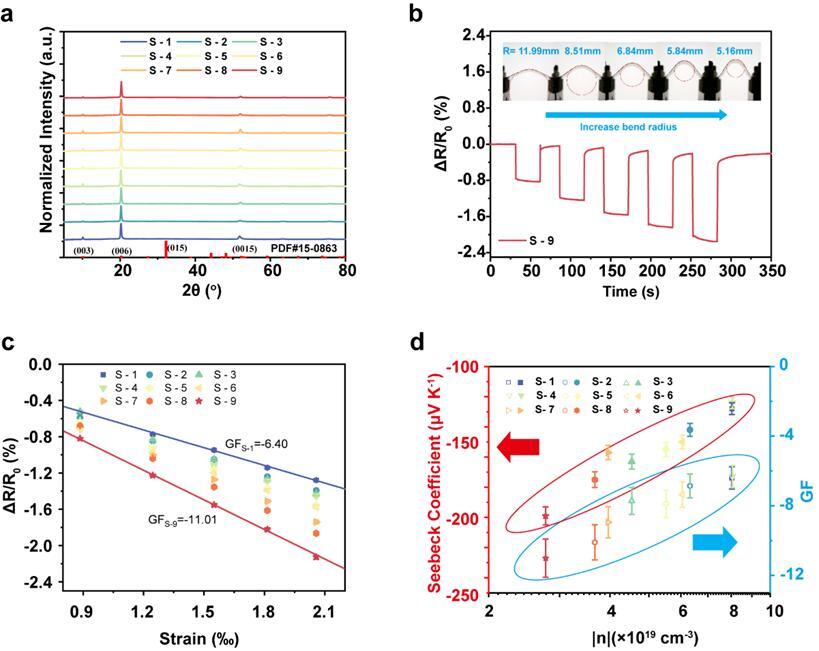
XRD patterns and piezoresistive effect of Bi₂Te₃/polyimide films with different carrier concentrations. (Image by IMR)
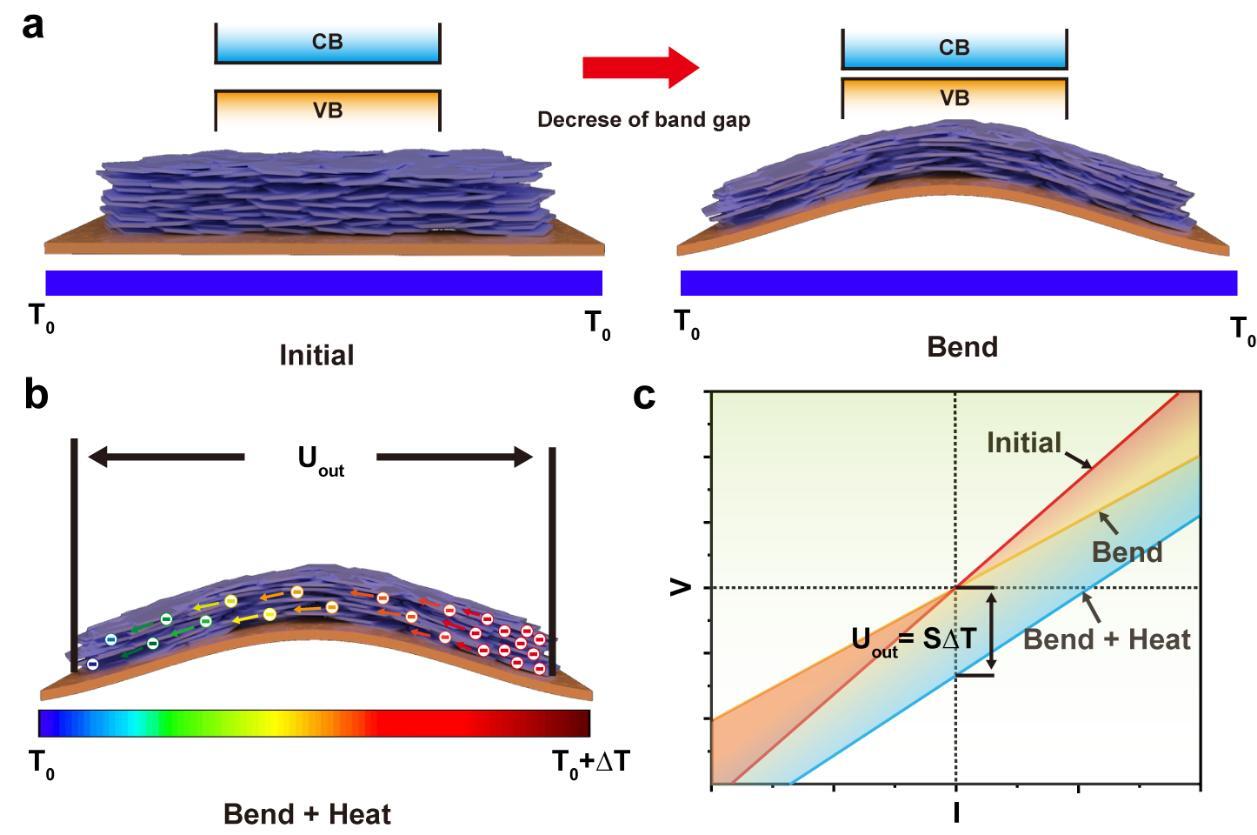
Temperature-strain sensing mechanism of the Bi2Te3/polyimide film. (Image by IMR)
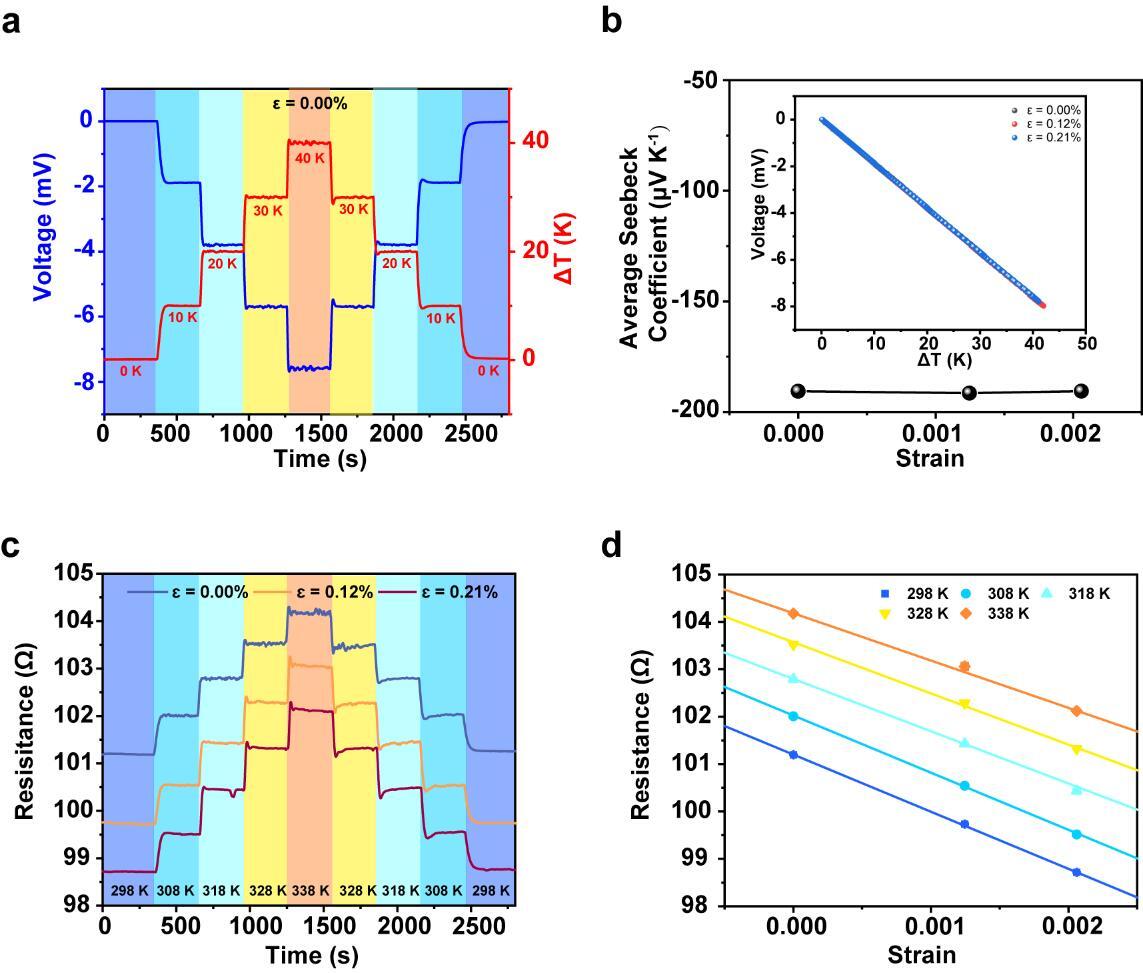
Coupling relationship between piezoresistive and thermoelectric effects in the Bi₂Te₃/polyimide film. (Image by IMR)
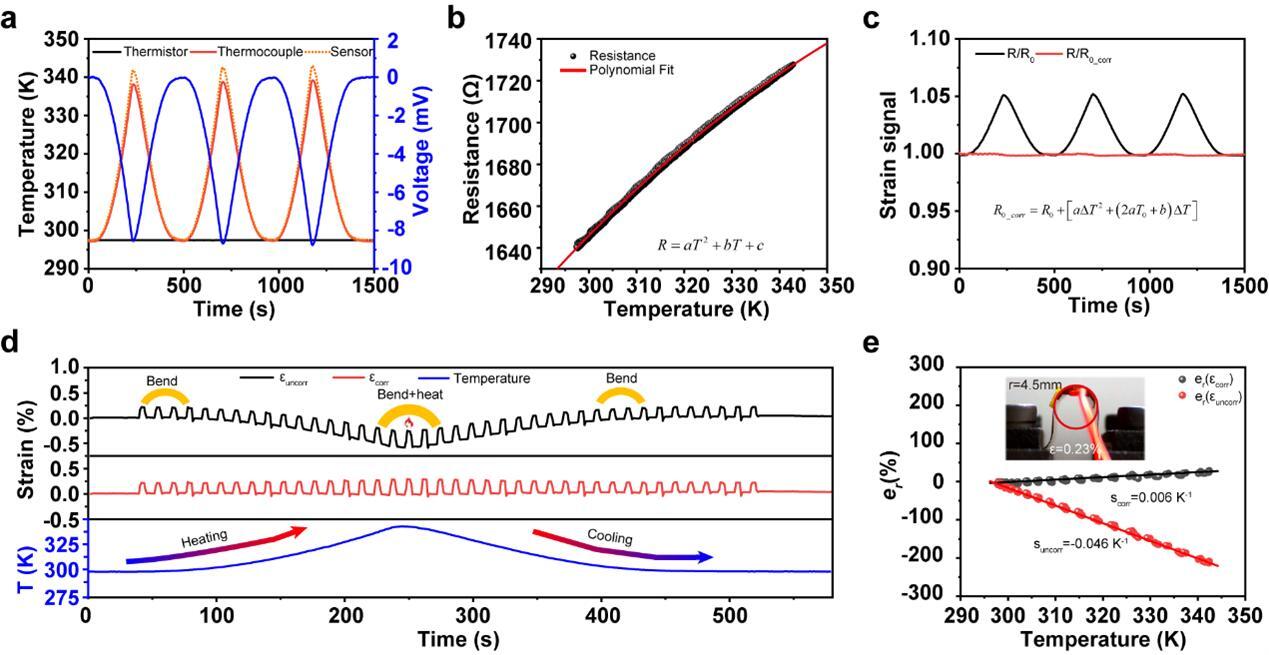
Decoupling of the temperature-strain sensor. (Image by IMR)
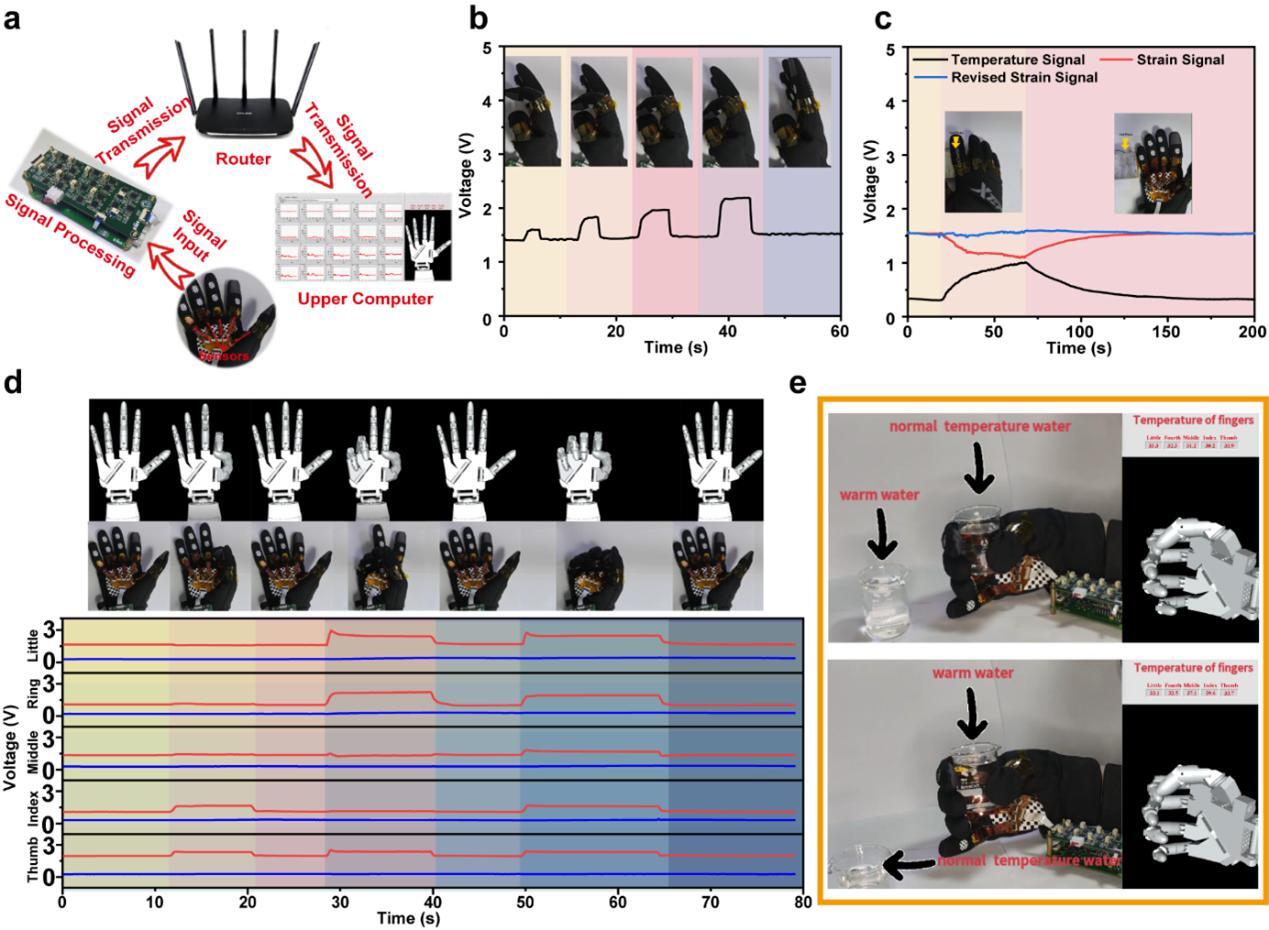
Practical application demonstration of the sensor integrated on a finger. (Image by IMR)